

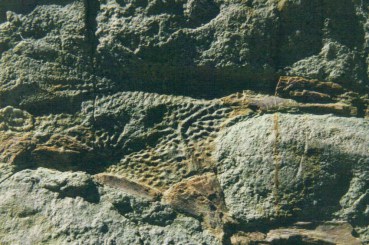
Interested in seeing the dinosaur tracks preserved in the rock faces in central Bolivia? Then stop by Cal Orko, because it’s host to the most diverse collection of dinosaur tracks on our planet.
We travelled three miles on board the ‘Dino Truck’ from Sucre to the vast wall of sedimentary rock.


Across a limestone slab 1.2km long and 80 metres high there are more than 462 individual trails and 5,000 dinosaur footprints.
The footprints belong to eight main species of dinosaur weighing up to 100 tonnes. The dinosaur footprint indents are visible on a vertical rockface which makes for easy viewing.
So how did this mind-boggling archaeological site come to be?
It all began 145 million years ago in the Cretaceous era… South America drifted away from Africa and joined with North America enabling wildlife migrations.
Herbivores were attracted to Cal Orko’s huge lake and the continent’s first flowers. Carnivores arrived next.
Unique climate fluctuations meant that the dinosaurs’ feet sank into the soft shoreline in warm damp weather, leaving marks that were solidified by later periods of drought.
Wet weather followed sealing the prints below mud and sediment. The wet-dry pattern was repeated seven times, preserving multiple layers of prints.
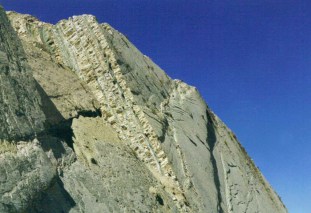
Tectonic activity pushed the flat ground up to today’s incredible dinosaur footprint viewing angle. Needless to say it’s huge!
This period of evolution ended with mass dinosaur extinction 80 million years later.

Our fantastic guide used plastic toy dinosaurs to explain how some of the trails formed.
Tyrannosaurus Rex, Albertosaurus, Corythosaurus, Anatosaurus, Parasaurolophus, Gigantosaurus. He described how a herbivore had been chased by a carnivore and eaten up for dinner – by showing us the inter-connecting trails and different footprints.
It must have been risky business being a herbivore at Cal Orko. 😉


 tidaltravel.co.uk