

Sacred for Aborigines, Uluru (formerly called Ayers Rock), is an Australian icon.
The sandstone rock is 1,141 ft high and has a circumference of 5.8 miles (9.4km).
The Base Walk is the most respectful way to appreciate Uluru. The walk will take you about 3.5 hours covering an overall distance of 10.5km.


Created over 600 million years ago, Uluru was formed as a result of sand deposits condensing below a long-gone sea.
Famous not only for its size but for its striking orange-red hues, coloured by the oxidation of iron at its surface. Go at sunrise and sunset to see the much-admired rock changing colour.
We travelled: in an old campervan.
We slept: under the stars in swag bags.
Best part: witnessing Uluru’s colours change at sunset.
Worst part: high February daytime temperatures and no air-con in the campervan.
Anywhere else worth visiting? While you’re in the area enjoy a walk around the the large steep-sided domed rock formations of the Olgas.
Just a few miles from Uluru, the Olgas are a group of 36 giant red rocks of varying rock types (granite, basalt and sandstone). They’re just as impressive as Uluru and home to rare plants and desert animals.
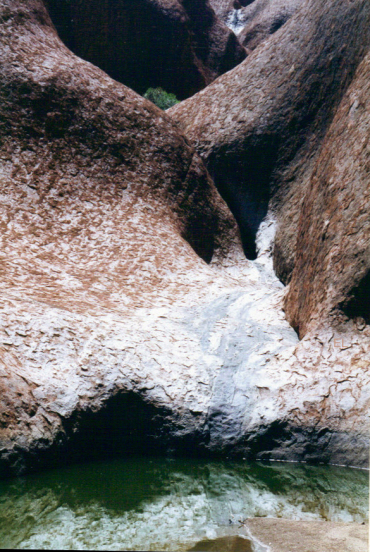
Now for the geography bit… During the formation of the mountain range layers of sandstone were raised from horizontal to vertical. Now, water soaks into the cracks and fissures causing erosion but also providing a source of water after heavy rains in the arid landscape.
 tidaltravel.co.uk
One thought on “Feeling hot in: Uluru-Kata Tjuta National Park”